How laser cutting is helping Guillow’s improve the building experience while preserving the hands-on tradition that has defined its model kits for generations.
For generations, building a Guillow’s model airplane has been a hands-on experience rooted in patience, craftsmanship, and the satisfaction of making something yourself.
That experience remains at the heart of Guillow’s as the technology used to create the kits has continued to evolve.
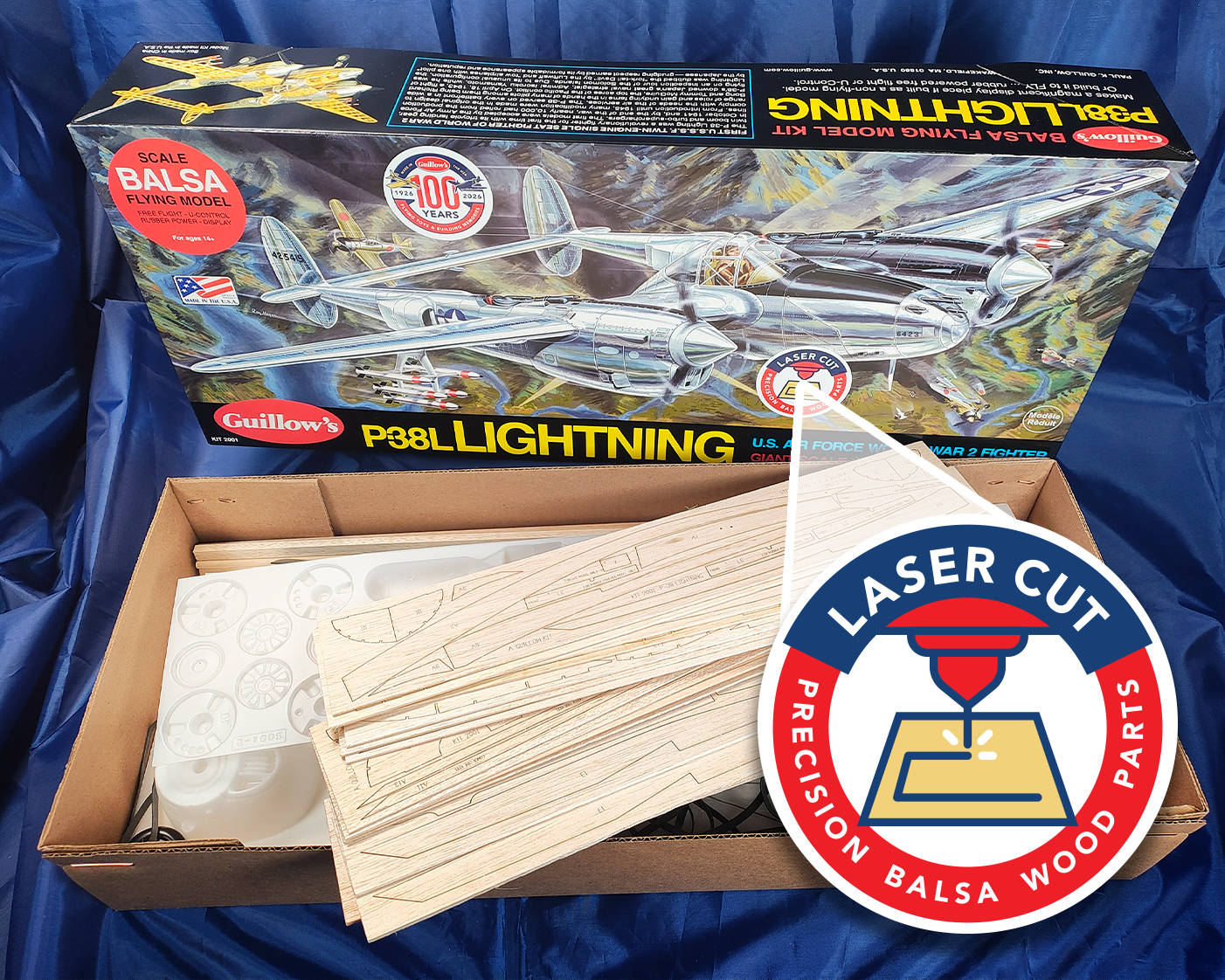
Today, more Guillow’s model kits feature precision laser-cut parts, making the pieces cleaner, more accurate, and easier to remove from the balsa sheets. For experienced builders, this means improved consistency and fit. For someone opening a Guillow’s kit for the first time, it can make the entire building experience more approachable.
From Die-Cut to Laser-Cut
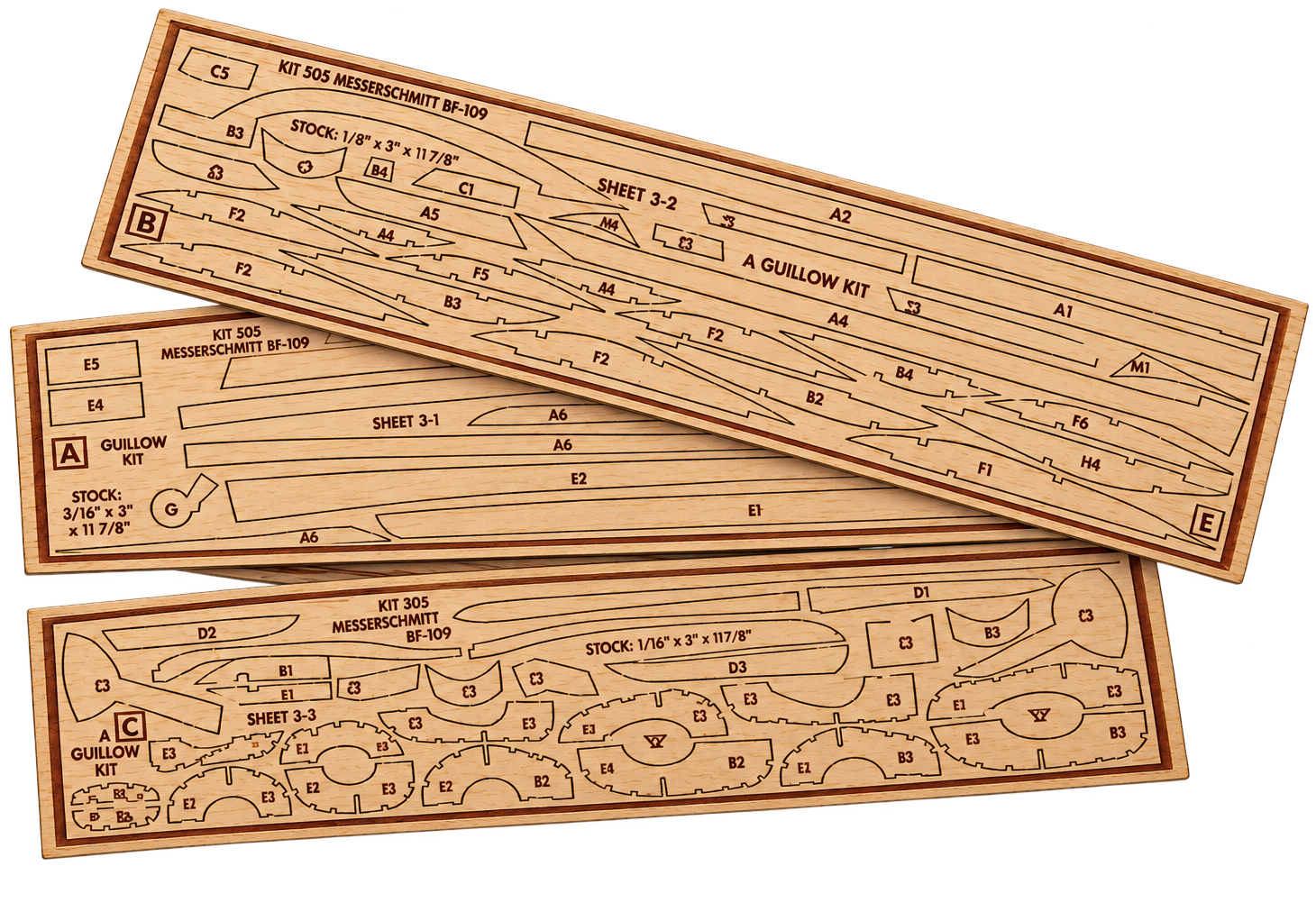
For decades, Guillow’s model parts were produced using traditional die-cutting methods. Generations of builders learned to carefully separate pieces from balsa sheets, sand edges when necessary, and make small adjustments during construction.
Laser cutting brings a new level of precision to the process.
Parts can be cut with greater consistency and detail, making them easier to remove and helping them fit together as intended. That means less time spent correcting or preparing parts and more time focused on the craftsmanship of the build itself.
The model still requires patience. Alignment still matters. Weight still matters. Careful construction still matters.
Laser cutting simply helps give the builder a better starting point.
Technology Changes. The Goal Doesn’t.
The technology used to create Guillow’s kits has changed considerably over the decades. Hand drafting eventually gave way to digital design, and traditional die-cut parts have increasingly been replaced by precision laser cutting.
But the fundamental challenge remains the same.
A Guillow’s model shouldn’t simply resemble an airplane. It should help a builder understand how an airplane goes together and, whenever possible, experience the satisfaction of watching it fly.
That is why the move toward laser cutting matters.
It is another way to preserve the hands-on building experience that has defined Guillow’s for generations, while making it more precise and accessible to the next generation.
Making a Classic Better
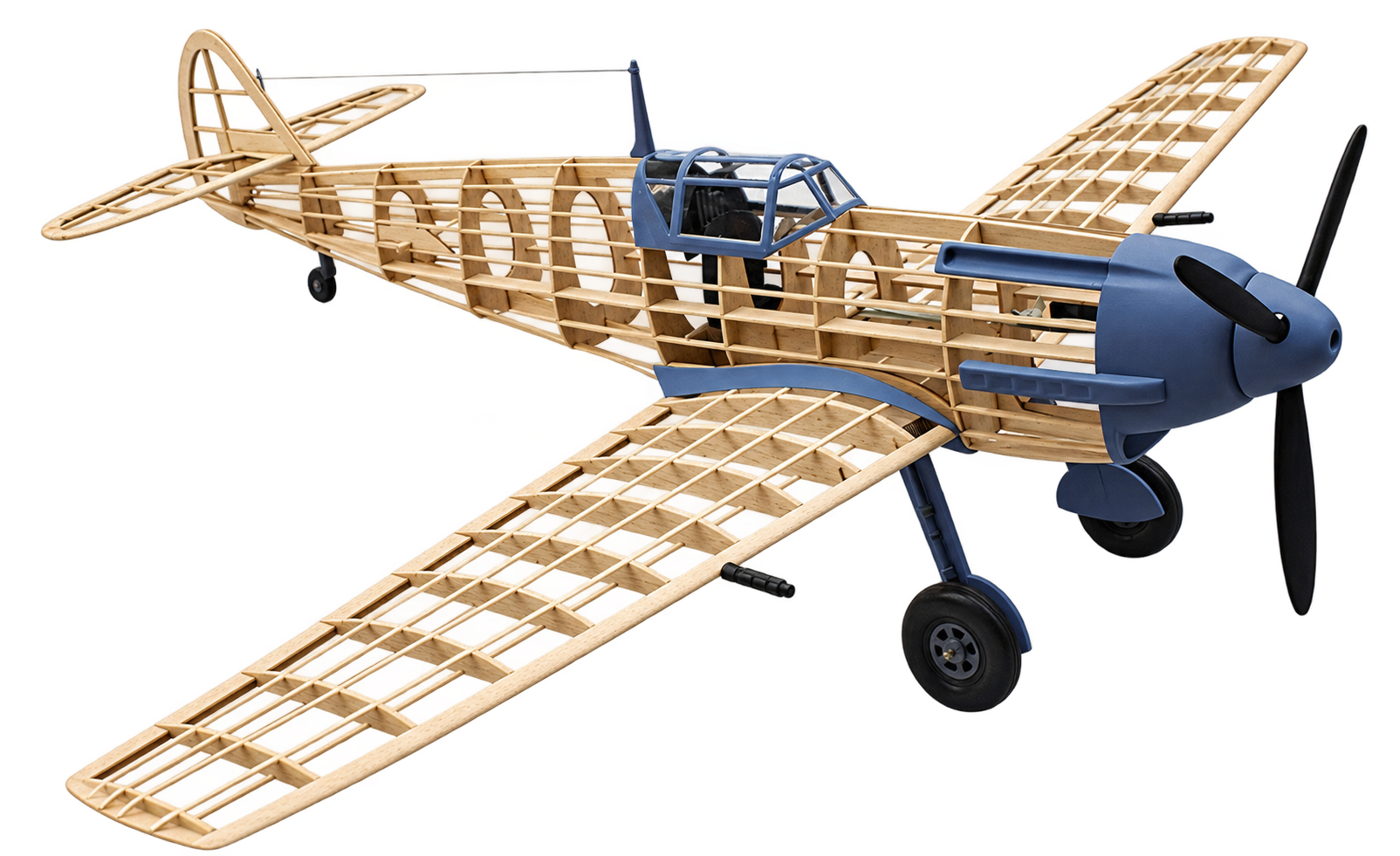
Part of the appeal of a Guillow’s kit is watching an airplane take shape, piece by piece, from sheets and strips of balsa. A wing begins as individual ribs and spars. A fuselage takes shape, one former at a time. Covering, finishing, and balancing transform that structure into something recognizable.
And then comes the moment every builder looks forward to: seeing the finished airplane.
For many models, that can also mean seeing whether all that careful work results in a successful flight.
Laser-cutting doesn’t change that experience. It makes the individual pieces more precise so the builder can focus on building the airplane.
A Small Label That Says a Lot
On the outside of a Guillow’s box, the Laser-Cut designation may seem like a small detail. For builders, it means more. It signifies cleaner parts, improved fit, and another step in the ongoing evolution of Guillow’s model kits. It also reflects something larger about a company celebrating its 100th anniversary.
Guillow’s has lasted for a century not by keeping every process the same, but by continuing to improve while protecting what matters most.
The materials, design tools, and methods for cutting parts may evolve, but the pleasure of building an airplane with your own hands and watching it take shape remains timeless.
And that is one tradition worth carrying into the next 100 years.